Your company publishes a detailed article for a search where people actually want to browse products. Or you optimize a broad category even though the query includes an exact model and a price. The page can be well written and technically sound, yet still be the wrong answer.
The reason is a mismatch between the searcher's task and the page type.
Search intent is what a person wants to accomplish with a query. They may be looking for an explanation, a choice among several products, a specific product, or a service provider.
The short answer is:
This is a starting framework, not an automatic rule. Check the decision against the specific query, the current Google results, and the pages that already exist on the website.
Do not begin by asking how many times a term should appear. Describe the task without using the keyword itself.
For example:
These four tasks require different content and a different next step. A long article cannot replace product selection, and a product page cannot fully answer a broad diagnostic question.
| Visitor's task | What they expect to find | Appropriate page type |
|---|---|---|
| Understand a topic or solve a problem | A clear explanation, steps, limitations, and examples | Article |
| Browse and compare a group of products | Options, filters, key differences, and a path to individual products | Category page |
| Evaluate a specific product | Price, images, specifications, availability, and ordering information | Product page |
| Choose and hire a service | Scope, process, terms, price or pricing factors, and a way to inquire | Service page |
An article is appropriate when the person needs knowledge, an explanation, or a solution to a problem before choosing a specific product or provider.
Examples include:
A useful article gives a direct answer near the beginning, explains the important conditions, and shows a sensible next step. It can naturally lead to a service, but it should not disguise a sales offer as an informational guide.
If the Google results are mostly guides, official documentation, and practical explanations, that is a strong sign that the task is informational. Look beyond the titles and check what visitors actually receive after opening the pages.
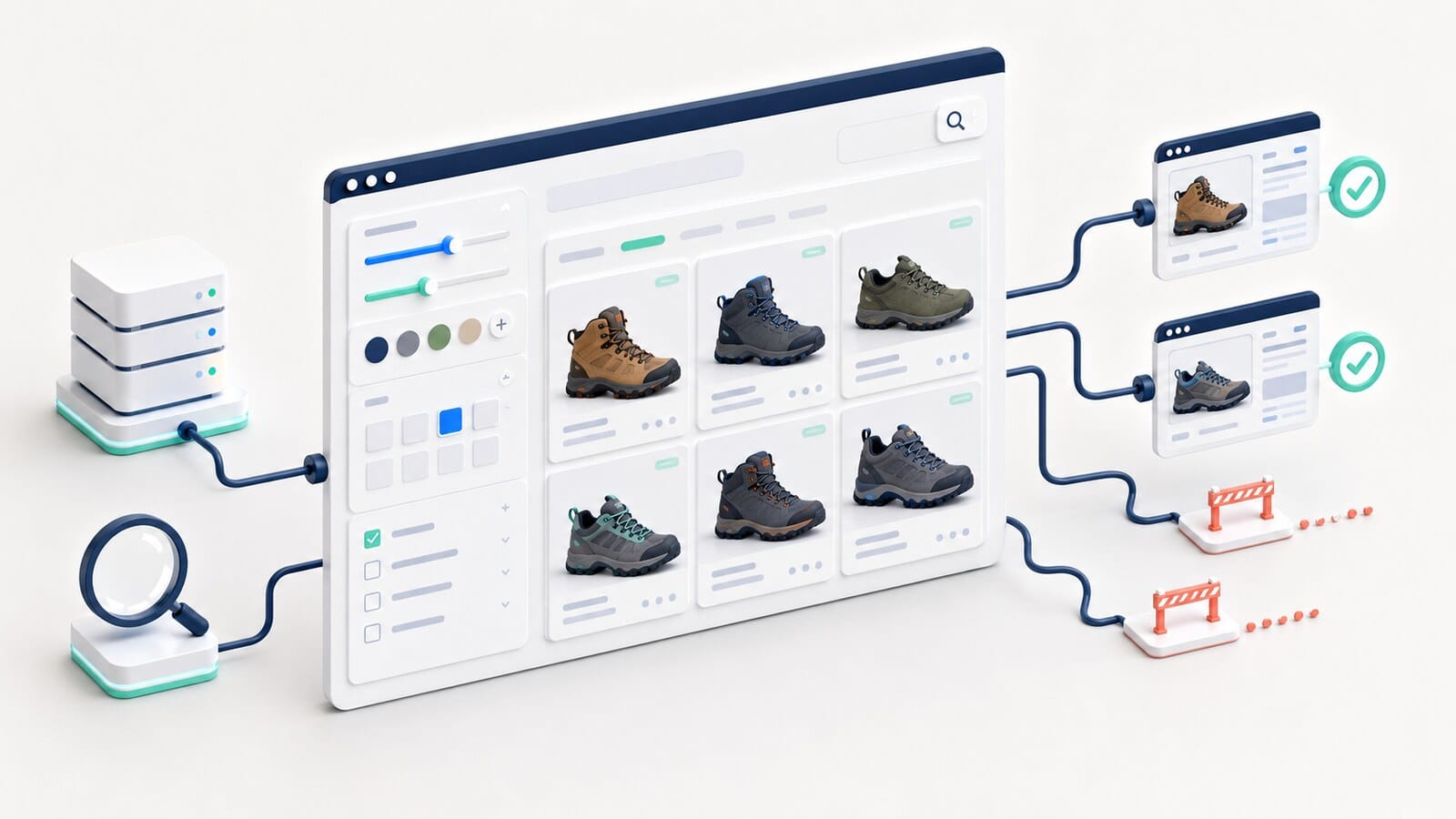
A category page is appropriate when the person has not chosen a specific product and expects to browse a group of options.
A search such as "office chairs" usually implies a choice among different models. A useful category should display the products, the main comparison criteria, available filters, and a path to each offer. A general article about the history of office chairs does not complete that task.
A category is not simply an article with a product list added to it. Its main purpose is to help the visitor narrow the choice. If the copy pushes the products too far down the page and interrupts browsing, the page can lose its practical value.
A product page is the right choice when the query points to a specific product, model, or offer.
The person expects exact information:
A query containing a brand, model, size, or product code often points to this page type. Still, review the current results because Google may show categories, comparisons, or official product pages for some searches.
A service page is appropriate when a person is deciding whether to hire someone to do the work and which provider to choose.
It should help them understand:
For example, "SEO" can support general research, but it often leads to the evaluation of a service. In that case, the page should clearly explain the work, the terms, and how to request an offer. A general article about the history and types of SEO does not replace that decision page.

Google explains that its systems work to present results that are relevant and helpful for the query. Results can vary by language, location, and device, while visible search features also change with the query. This is covered in Google's official guide to how Google Search works.
For an important page, use this review:
A single review is not a permanent verdict. The result mix can change for seasonal searches, new products, and developing topics. Record the date and repeat the analysis when an important decision is being made or when the page's performance changes substantially.
Google sometimes shows articles, category pages, and service pages for the same short query. This means the query allows more than one reasonable interpretation. It does not mean that one page should try to complete every task at once.
Choose the primary task for the specific URL and complete it consistently. If the website genuinely serves a separate audience with a separate useful task, two pages may be needed. For example:
The two pages should be clearly different in purpose, title, and content. If they try to answer the same question in nearly the same way, there is a risk of cannibalization between the pages.
A new URL is not automatically the solution. First check whether the website already has a page of the correct type that serves the same task.
Improve the existing page when:
Create a separate page only when the task stands on its own, the page type is different, and the boundary can be explained clearly. Then decide where the page belongs in the website structure and how visitors will reach it.
Search intent helps you choose the page type and its primary task. By itself, it does not determine:
Google recommends creating content primarily for people and providing real value, rather than writing only to influence rankings. Its practical self-assessment questions are available in the official guide to helpful, reliable, people-first content.
Do not mechanically copy the average structure of the leading results. Use those pages to understand the expected page type, then create a clearer and more useful answer for your own audience.

Before commissioning new copy, work through these seven steps:
If the answers are unclear, do not begin by adding more copy. Clarify the task and the page type first.
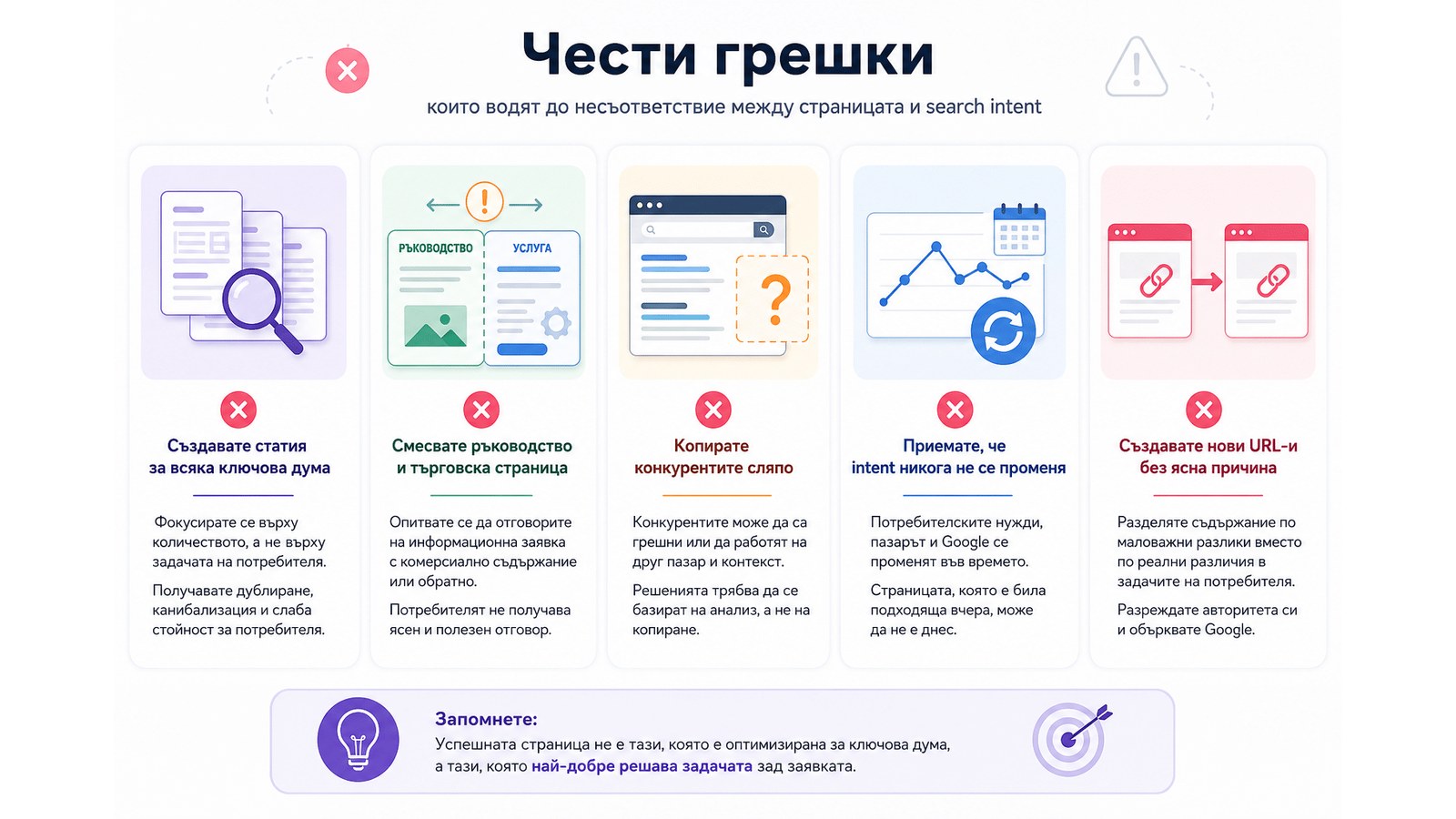
The underlying problem is the same: starting with the keyword rather than the task and the expected page type.
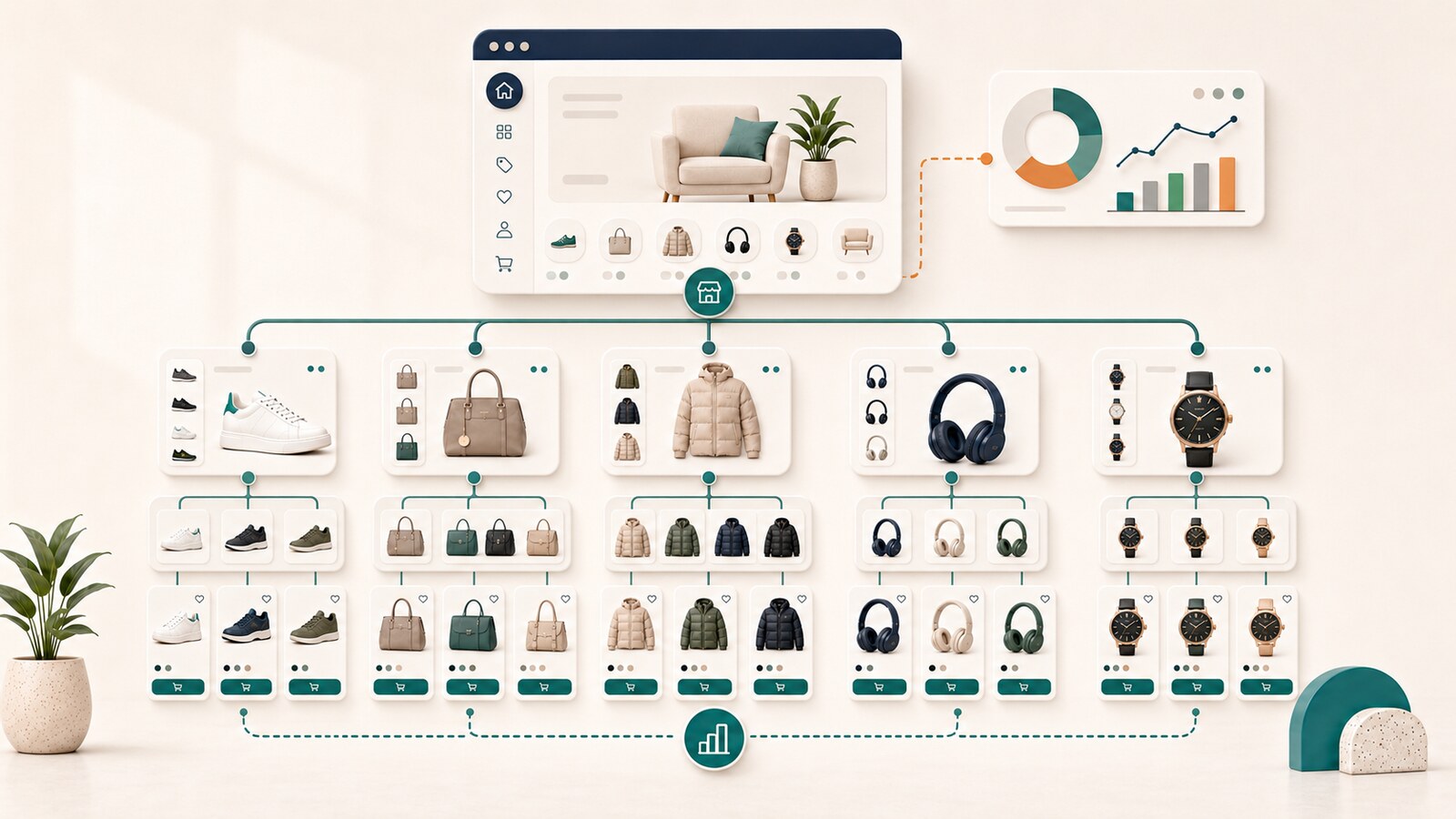
Choosing a page type is rarely an isolated issue. A website with many services, categories, and products needs its queries, existing URLs, structure, and links reviewed as one system.
With our SEO services, we analyze which pages should answer the searches that matter to the business and implement the necessary content and website changes. The goal is for every important task to lead to an appropriate page without unnecessary duplication.